
Imagine stepping out of your house to pluck a fresh amla, jamun, guava or ber from the tree. Besides the fruit that is available seasonally, the tree can provide shade, support birds and pollinators, contribute greenery to the neighbourhood and forge a living link between a family and nature.
Planting native fruit trees in India can be a practical way for families and communities to contribute to a greener and healthier future. When suitable species are selected for local soil, rainfall, climate and available space, fruit-bearing trees can provide benefits for many years.
India has such diverse landscape that for generations it has supported an amazing diversity of useful trees. Many traditional fruit species are well adapted to local conditions and have long been associated with local diets, rural livelihoods, cultural practices and biodiversity.
But successful tree planting is not just putting a sapling in the ground.
The right tree must be planted in the right place and cared for during its establishment period. Space, water availability, mature tree size, soil conditions and local ecology should all influence the decision.
At Shyomika Foundation, tree planting can be viewed not simply as increasing plantation numbers but as building healthier relationships between people, communities and the environment.
Here are 10 fruit trees worth considering for suitable locations across India, along with practical guidance for choosing and planting them responsibly.
Why Should Indian Families Plant Fruit Trees?
A fruit tree is more than a source of food.
Once established, a well-chosen tree can become part of a family’s everyday environment for years. It can provide seasonal produce, create shade, offer habitat and make residential and community spaces greener.
One Tree Can Deliver Multiple Benefits
Depending on the species and location, fruit trees may contribute to:
- Fresh seasonal produce
- Shade and cooling
- Habitat for birds and insects
- Greener surroundings
- Soil protection
- Carbon storage
- Greater awareness of seasonal food
Trees can also create educational opportunities for children.
Watching a sapling grow, flower, attract pollinators and eventually produce fruit makes environmental learning tangible.
Instead of thinking of tree planting as a one-day activity, families can treat it as a long-term commitment to nurturing a living part of their local ecosystem.
Benefits of Planting Native Trees for a Healthier Environment
Native trees and locally adapted trees can have an important ecological function.
Species that have been around a long time in a region may support relationships with local insects, birds, animals, fungi and other organisms.
Planting Should Support Ecology, Not Just Appearance
The benefits of planting native trees can include supporting habitat, increasing plant diversity, providing food resources for wildlife and creating greener landscapes.
However, “native” should not be treated as a universal label for all of India.
India has many climatic and ecological zones. A species associated with one region may not be appropriate for another.
Before planting, consider:
- Local climate
- Annual rainfall
- Soil type
- Water availability
- Elevation
- Mature tree size
- Available planting space
Local suitability is more important than choosing a species simply because it appears on a popular tree-planting list.
1. Amla – A Valuable Tree for Home and Community Planting
Amla, or Indian gooseberry, is widely known across India for its distinctive sour fruit and long association with traditional diets.
The tree can be a useful choice for suitable home gardens, farms, community spaces and plantation projects.
Why Consider Planting Amla?
Amla fruit is commonly used in:
- Pickles
- Chutneys
- Preserves
- Juices
- Traditional food preparations
Its fruit is well known as a source of vitamin C and other naturally occurring plant compounds.
From a planting perspective, amla can be valuable because it combines food production with long-term tree cover.
As with any fruit tree, choose healthy planting material and ensure the selected variety and growing conditions are appropriate for your region.
2. Jamun – A Fruit Tree With Ecological and Cultural Value
Jamun is a familiar seasonal fruit in many parts of India.
Its dark purple fruits are enjoyed fresh and are also used in various traditional preparations.
A mature jamun tree can grow large, so it requires adequate space.
A Tree That Can Support Wildlife Too
Fruit-bearing trees like jamun can offer food for birds and other wildlife.
This makes them valuable not only from a human food point of view, but as part of a larger ecological landscape.
Jamun can grow to be a large tree so it should not be planted too close to buildings, walls, underground infrastructure or where mature canopy size may be an issue.
You need to plan for the size of the tree when it is an adult.
3. Ber – A Resilient Fruit Tree for Suitable Dry Regions
Ber has a long history of cultivation and use in India.
Its fruits are eaten fresh and can also be processed into different food products.
The tree is especially interesting for regions where water availability may be a concern, although specific varieties and local growing conditions should always be considered.
Why Ber Deserves More Attention
Ber can offer several practical advantages:
- Nutritious seasonal fruit
- Suitability for certain drier environments
- Value for home orchards and farms
- Potential support for local food systems
For families searching for the best native trees for Indian climate, the answer should always depend on the specific climate of their region.
A tree suitable for Rajasthan may not be the ideal choice for a high-rainfall region of the Western Ghats or Northeast India.
4. Bael – A Traditional Tree With Multiple Uses
Bael is deeply connected with Indian culture and traditional food practices.
Its hard-shelled fruit contains aromatic pulp commonly used in beverages and other preparations.
The tree can be considered for appropriate landscapes where it has enough room to mature.
Combining Cultural Heritage With Greener Spaces
Planting traditional fruit species can help preserve knowledge about seasonal foods and culturally important plants.
Bael also reminds us that tree planting is not only about fast-growing ornamental species.
Traditional trees can connect:
- Ecology
- Food
- Culture
- Community memory
Families should still assess local suitability before planting and obtain saplings from reliable nurseries whenever possible.
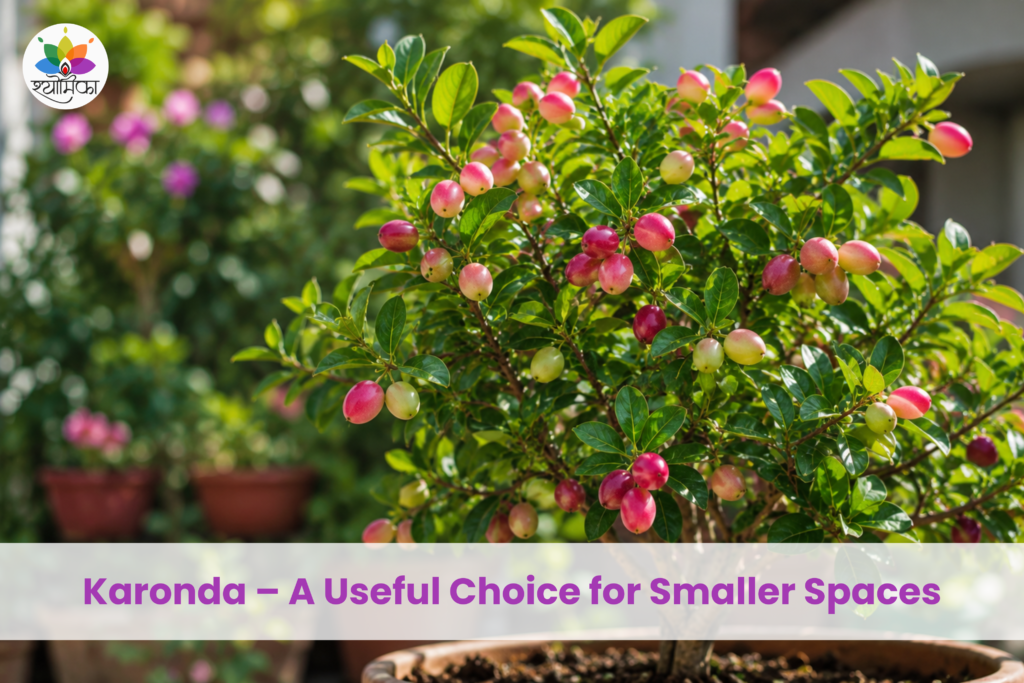
5. Karonda – A Useful Choice for Smaller Spaces
Not every family has enough land for a large fruit tree.
Karonda can be particularly interesting because it is generally grown as a shrub or small woody plant rather than a massive canopy tree.
Its fruits are commonly used in pickles and preserves.
Small Spaces Can Still Support Useful Planting
People living in smaller homes should not feel excluded from environmental action.
Depending on available space, they can consider:
- Smaller fruit species
- Suitable shrubs
- Terrace-friendly plants
- Community planting
- Shared neighbourhood green spaces
Karonda can also be useful in certain hedge-style plantings.
The broader lesson is that planting should match available space rather than forcing a large species into an unsuitable location.
6. Phalsa – A Seasonal Fruit Worth Remembering
Phalsa produces small fruits that are especially associated with warm-weather refreshments in parts of India.
It is generally smaller than many large fruit trees, making it potentially useful in suitable gardens and managed landscapes.
Traditional Fruits Can Add Diversity to Our Diets
Today’s food market often concentrates on a narrow range of commercially successful fruits.
Growing traditional and regional fruit species can help keep alive the awareness of the diverse food heritage of India.
For example, Phalsa may not be as popular as Mango or Guava but it is culturally and seasonally relevant.
It also discourages the planting of the same few trees everywhere and encourages diverse fruit species.
7. Tamarind – A Long-Lived Tree for Spacious Locations
Tamarind is widely used in Indian cooking and has deep cultural and culinary significance.
Its tangy pulp appears in chutneys, curries, drinks, sauces, and regional dishes.
However, tamarind can grow into a large tree.
Think Decades Ahead Before Planting Large Trees
A common tree-planting mistake is choosing a sapling based on its current size rather than its mature form.
Before planting a large tree such as tamarind, ask:
- How wide will the canopy become?
- Are buildings nearby?
- Are there overhead power lines?
- Is there enough root space?
- Will the location remain suitable in 10 or 20 years?
A well-placed large tree can become a community asset.
A poorly placed one may eventually need severe pruning or removal.
8. Jackfruit – Food, Shade, and Long-Term Value
Jackfruit is an important food tree in many tropical parts of India.
Its large fruits are used at different stages of maturity and its seeds are also used in food preparations.
It grows best where climate and rainfall conditions are suitable.
A Valuable Tree for Appropriate Tropical Regions
Jackfruit can contribute to household food diversity while also creating substantial green cover.
However, it requires enough space and should be planted where its mature size can be accommodated.
This is an important principle when selecting the best fruit trees to grow in India: there is no single list that works equally well everywhere.
Choose species according to local ecology rather than national popularity alone.
9. Kokum – A Regional Treasure of India’s Western Coast
Kokum is strongly associated with India’s western coastal regions, especially areas with climatic conditions suitable for its growth.
Its fruit is used in regional cuisines and traditional beverages.
Regional Species Matter in Tree Plantation
Kokum demonstrates why local biodiversity should guide planting decisions.
India’s ecological diversity means different regions have their own valuable fruit species.
Instead of planting identical species across the country, communities can identify trees naturally suited to their local environment.
This approach can help preserve regional plant diversity while keeping traditional food knowledge alive.
10. Lasoda – An Underappreciated Traditional Fruit Tree
Lasoda is another traditional fruit-bearing tree found in parts of India.
Its fruits are used in regional food preparations, including pickles.
It may not be as commercially famous as mango or guava, but lesser-known species deserve attention in conversations about ecological and food diversity.
Protecting Traditional Tree Knowledge
When communities stop planting locally familiar species, knowledge can gradually disappear.
Future generations may know imported or commercially dominant fruits while becoming unfamiliar with trees that once formed part of local landscapes.
Planting appropriate traditional species can help preserve both biodiversity and cultural knowledge.
Indigenous Fruit Trees of India and Biodiversity
In India there’s much more diversity of fruit than you see in most supermarkets.
Over generations, different areas have formed relationships with different fruit-bearing trees.
This diversity is important to protect.
Avoid Turning Plantation Into a Monoculture
Planting thousands of trees sounds impressive, but ecological value depends on what is planted, where it is planted and how well it survives.
Large-scale planting of a single species can create problems if the species is poorly suited to the site or reduces ecological diversity.
When planning plantations, consider a suitable mix of species based on:
- Local ecology
- Soil
- Water
- Native vegetation
- Wildlife needs
- Community requirements
Understanding the indigenous fruit trees of India at a regional level can help communities make more informed planting choices.
Native Trees for Biodiversity: Why Species Selection Matters
Trees interact with the environment around them.
Their flowers may support pollinators, fruits may feed wildlife, branches can provide nesting spaces and leaf litter contributes organic matter to the soil.
A Tree Can Become a Small Ecosystem
Planting native trees for biodiversity can help create more connected habitats, particularly when trees are combined with shrubs, grasses and other locally appropriate vegetation.
A diverse planting area may support:
- Bees
- Butterflies
- Birds
- Small animals
- Soil organisms
However, biodiversity planting should not focus only on fruit trees.
Natural ecosystems contain many plant types. A balanced community or restoration project may require a wider mix of locally appropriate species.
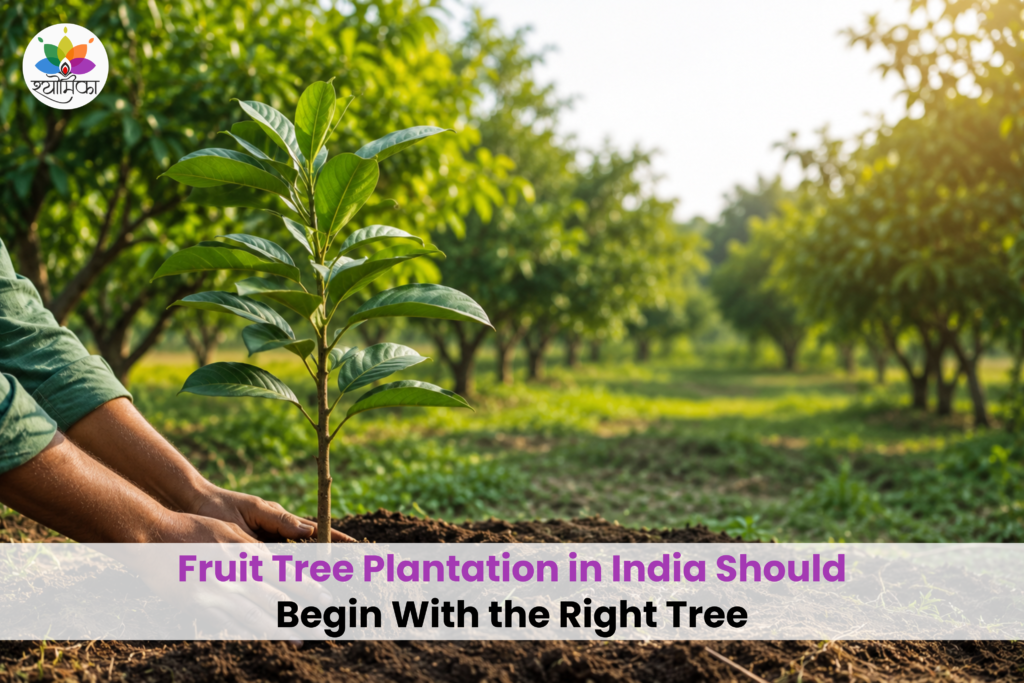
Fruit Tree Plantation in India Should Begin With the Right Tree
Successful plantation is not measured by how many saplings are distributed on planting day.
Survival matters more.
A sapling that dies within a few months provides little long-term environmental benefit.
Right Tree, Right Place, Right Care
Before planting, evaluate:
- Climate: Can the species tolerate local temperatures and rainfall?
- Soil: Is drainage and soil type appropriate?
- Space: Will the mature tree fit safely?
- Water: Can the young tree receive enough water during establishment?
- Purpose: Is the tree being planted for food, shade, biodiversity, community use or multiple benefits?
- Care: Who will protect and maintain the sapling?
This approach makes fruit tree plantation in India more meaningful and sustainable.
How Families Can Choose the Right Fruit Tree
You do not need to be a botanist to make a thoughtful planting decision.
Start by understanding your location.
Ask These Questions Before Buying a Sapling
Consider:
- How much sunlight does the site receive?
- How much space is available?
- What is the local rainfall pattern?
- Is irrigation available?
- How large will the tree become?
- Is the species suitable for the region?
- Is the nursery reliable?
Local horticulture departments, agricultural universities, forestry experts and reputable nurseries can provide useful region-specific guidance.
Avoid selecting a tree only because it is trending on social media.
When Is the Best Time to Plant Fruit Trees in India?
Planting time is determined by region and species.
In many areas the rainy season can create good conditions for establishing suitable trees, with natural rain helping to keep the soil moist.
However, heavy waterlogging may damage some species.
Match Planting Time With Local Weather
Before planting:
- Understand local monsoon patterns.
- Avoid waterlogged locations unless the species tolerates them.
- Prepare the planting site properly.
- Ensure drainage where necessary.
- Arrange post-planting care.
Do not assume that rainfall eliminates the need for monitoring.
Young saplings may still require protection, mulching, watering during dry spells and replacement if they fail.
How to Care for a Newly Planted Fruit Tree
The first few years are critical.
Plantation campaigns often focus heavily on the planting ceremony but give less attention to what happens afterward.
Long-term care determines whether the sapling becomes a mature tree.
Simple Steps That Improve Survival
After planting:
- Water according to species and weather needs.
- Apply appropriate mulch around the root zone.
- Keep mulch away from direct contact with the trunk.
- Protect young trees from livestock or physical damage.
- Remove competing weeds when necessary.
- Monitor pests and disease.
- Use supports only when required and remove them appropriately.
Keep checking the tree.
A five-minute inspection every few weeks can identify problems before they become severe.
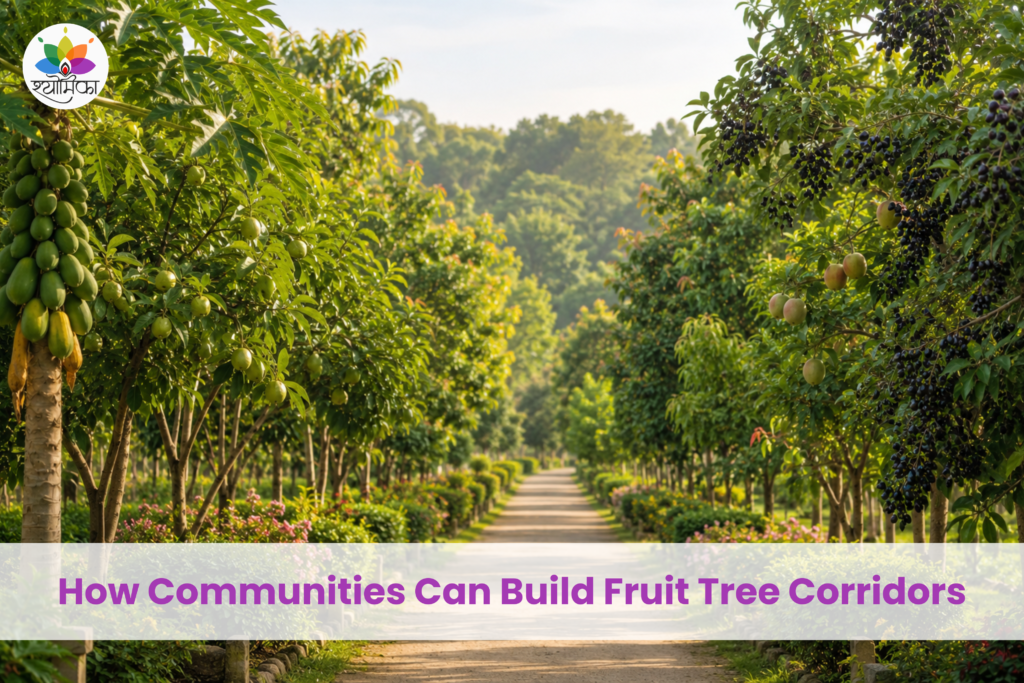
How Communities Can Build Fruit Tree Corridors
One family planting one tree is valuable.
Many families planting suitable trees together can create a much larger impact.
Turn Individual Action Into Community Action
Communities can identify appropriate planting opportunities around:
- Schools
- Community centres
- Panchayat land where permitted
- Institutional campuses
- Farms
- Suitable residential areas
Planting on public or institutional land should always be done with the necessary permission and a clear maintenance plan.
Community plantation works best when responsibility is defined.
Someone must water, protect, monitor and care for the trees after the planting event ends.
How Shyomika Foundation Can Inspire a Greener Future
Tree planting becomes more powerful when it connects environmental responsibility with community participation.
Families, schools, volunteers, local organizations and institutions can all contribute.
Plant for Survival, Not Just Plantation Numbers
Shyomika Foundation represents an opportunity to encourage a more thoughtful approach to environmental action—one where planting is followed by care, monitoring and community ownership.
A meaningful plantation initiative can focus on:
- Locally suitable species
- Biodiversity
- Community awareness
- Sapling survival
- Long-term maintenance
- Environmental education
The goal should not simply be to say, “We planted 1,000 trees.”
A more meaningful question is:
“How many of those trees are healthy and growing years later?“
That shift in thinking can make plantation initiatives more sustainable and impactful.
Frequently Asked Questions (FAQs)
Q: 1. Which fruit trees are suitable for planting in India?
Amla, jamun, ber, bael, karonda, phalsa, tamarind, jackfruit, kokum and other regional species may be suitable depending on local climate, soil, rainfall and space.
Q: 2. Are native fruit trees better than exotic trees?
Locally native species can offer ecological advantages, but suitability depends on the specific region and planting purpose. Choose trees based on local ecology rather than labels alone.
Q: 3. Which fruit tree is best for a small home garden?
The best choice depends on available space and climate. Smaller species or shrubs such as karonda may suit some gardens better than large trees like tamarind or jamun.
Q: 4. When is the best time to plant fruit trees?
Planting time varies by region and species. The monsoon can be suitable in many areas, but local rainfall, drainage and species requirements should guide timing.
Q: 5. How can fruit trees help biodiversity?
Suitable fruit trees can provide food, shelter, nesting opportunities and habitat resources for birds, pollinators, insects and other organisms.
Q: 6. Is planting a sapling enough to help the environment?
No. Long-term survival is essential. Young trees require appropriate watering, protection, monitoring and maintenance until they become well established.
Q: 7. How can families support Shyomika Foundation’s green vision?
Families can plant locally suitable trees, care for existing greenery, participate in responsible plantation initiatives, educate children and encourage long-term community stewardship.
Conclusion
A fruit tree is one of the few gifts a family can plant today that may continue giving for years.It can provide seasonal food, shade, habitat, greener surroundings and a living connection with India’s natural and cultural heritage.
Choosing native fruit trees in India should, however, be done thoughtfully.
India is not one ecological zone. The right species for Punjab may not be the right species for Kerala, Rajasthan, Assam or Maharashtra. The choice of trees should always be guided by climate, soil, rainfall, space and local biodiversity. Families can start small. Plant the correct tree and look after it.Teach children its name. Watch its seasons change. Notice the first flowers, the pollinators that visit, the birds that arrive and eventually the fruit it produces.
Communities can take the idea further by creating thoughtfully planned green spaces using diverse, locally appropriate species.
Through environmental awareness and community participation, Shyomika Foundation can help encourage a culture in which tree planting is not treated as a one-day event but as a long-term responsibility.
Because a healthier future will not be built simply by counting how many saplings we plant.It will be built by nurturing the trees that survive, protecting biodiversity, restoring green spaces and helping the next generation understand why nature deserves care.Plant the right tree.Plant it in the right place.Care for it long enough to watch it grow.That is how one small sapling can become part of a healthier future for India.
