
Children are naturally curious about their world. They enjoy going to parks, watching birds, picking up leaves and asking questions about plants, insects and animals. Such daily moments are great opportunities to develop a lifetime appreciation for the environment. “Parents, teachers and communities who encourage children to engage with nature from an early age help build habits that benefit both the child and the planet.
Learning to teach kids to love nature goes beyond outdoor play. It involves helping children understand the importance of protecting ecosystems, respecting wildlife, reducing waste and making environmentally responsible choices in their daily lives. Small experiences, such as planting a tree or observing butterflies in a garden, can leave lasting impressions that shape future attitudes toward conservation.
At Shyomika Foundation we believe that first step towards environmental awareness is education and experiences. By exposing children to nature, sustainability practices and biodiversity, families can help develop the next generation of responsible environmental stewards.
This guide offers practical ideas to get children outdoors and into nature, explains why environmental education is important and suggests simple activities to make learning fun and memorable.
Why Teaching Children to Love Nature Matters
Building a Lifelong Connection with the Environment
Children who spend time outdoors often develop a stronger appreciation for the natural world. Whether they are observing birds, watering plants, or exploring forests, these experiences encourage curiosity and respect for the environment.
Helping families teach kids to love nature creates opportunities to:
- Develop empathy for living things
- Understand ecosystems
- Appreciate biodiversity
- Build healthy outdoor habits
- Learn environmental responsibility
These early experiences often influence lifelong attitudes toward conservation and sustainable living.
Creating Responsible Future Citizens
Today’s children will become tomorrow’s decision-makers.
Teaching environmental responsibility from an early age encourages future adults who are more likely to:
- Protect natural resources
- Reduce pollution
- Support conservation efforts
- Make sustainable lifestyle choices
- Inspire others to care for nature
Communities benefit when environmental awareness becomes part of everyday education.
Benefits of Nature for Child Development
Supporting Physical and Emotional Growth
The benefits of nature for child development extend well beyond environmental awareness.
Regular outdoor experiences may help children:
- Stay physically active
- Improve balance and coordination
- Develop creativity
- Reduce stress
- Improve concentration
- Strengthen emotional resilience
Time spent outdoors also encourages curiosity, imagination and problem-solving through unstructured exploration.
Encouraging Healthy Social Skills
Nature-based activities often involve teamwork, communication and shared experiences.
Whether children participate in gardening, nature walks or environmental projects, they learn valuable social skills including:
- Cooperation
- Patience
- Responsibility
- Observation
- Respect for others
- Leadership
These experiences contribute to healthy emotional and social development.
Environmental Education for Children
Learning Beyond the Classroom
Effective environmental education for children combines classroom learning with real-world experiences.
Rather than simply reading about ecosystems, children benefit from:
- Visiting parks
- Exploring forests
- Observing insects
- Growing plants
- Learning about local wildlife
- Participating in clean-up activities
Hands-on learning helps children understand environmental concepts more effectively than theory alone.
Parents and Schools Working Together
Environmental education becomes even more meaningful when families and schools work together.
Parents can reinforce classroom learning by:
- Discussing nature at home
- Encouraging outdoor exploration
- Reading environmental books
- Watching educational documentaries
- Participating in local conservation events
Organizations such as Shyomika Foundation also play an important role by promoting community awareness, environmental campaigns and educational initiatives that inspire children to care for the natural world.
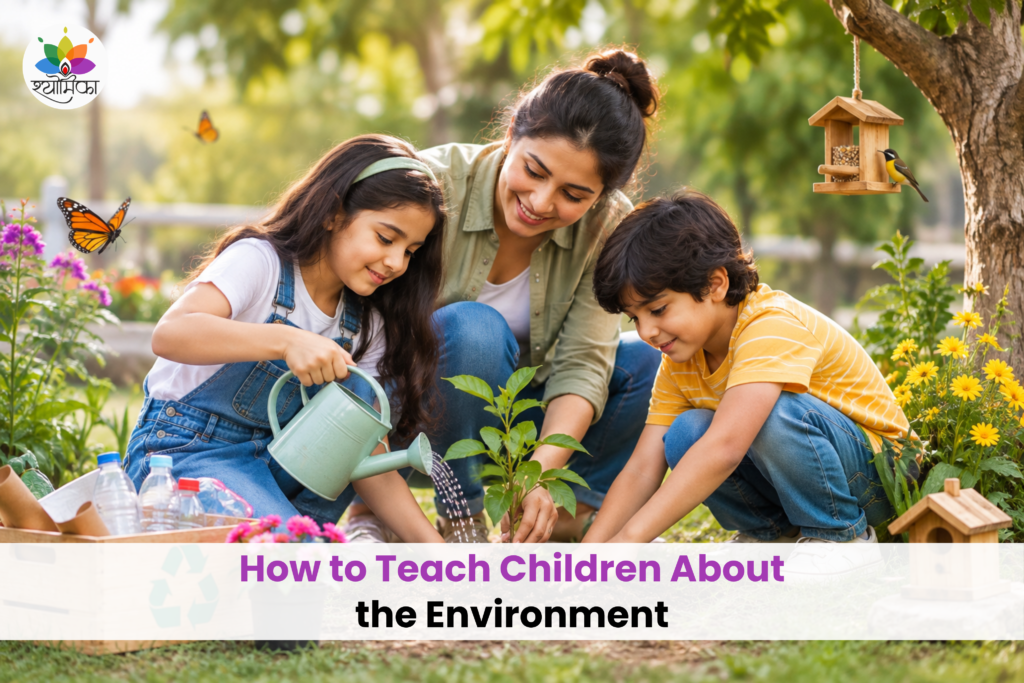
How to Teach Children About the Environment
Make Learning Fun and Interactive
Many parents wonder how to teach children about the environment without making learning feel like a lesson.
The best approach is to turn environmental education into enjoyable experiences.
Ideas include:
- Planting flowers together
- Watching butterflies
- Creating bird feeders
- Recycling household materials
- Visiting botanical gardens
- Exploring nearby nature trails
Children learn most effectively when they actively participate rather than simply observe.
Encourage Curiosity Through Everyday Experiences
Simple daily activities often become valuable learning opportunities.
Encourage children to:
- Ask questions about plants and animals.
- Observe seasonal changes.
- Identify different bird species.
- Collect fallen leaves for crafts.
- Notice how weather affects nature.
These small moments help children develop curiosity, appreciation and a stronger connection with the environment.
Nature Activities for Kids
Turn Outdoor Time into Learning Time
One of the easiest ways to inspire children to appreciate the environment is by making outdoor experiences both fun and educational. Engaging in nature activities for kids helps them develop curiosity, creativity and a deeper understanding of the natural world.
Simple activities include:
- Nature scavenger hunts
- Leaf and flower identification
- Birdwatching
- Tree planting
- Gardening
- Butterfly observation
- Rock and insect exploration
These activities encourage children to observe their surroundings carefully while learning about biodiversity and ecosystems.
Make Nature Part of Everyday Life
Nature doesn’t always require a national park or forest visit. Everyday experiences can become meaningful environmental lessons.
Parents can encourage children to:
- Water household plants
- Grow herbs on a balcony
- Observe birds from a window
- Walk in local parks
- Watch sunsets together
- Explore nearby green spaces
Regular exposure helps children develop a lifelong appreciation for nature.
Connecting Children with Nature
Why Direct Experiences Matter
Experts agree that connecting children with nature is one of the most effective ways to nurture environmental responsibility.
Direct interaction with natural environments allows children to:
- Build emotional connections with wildlife
- Develop respect for living organisms
- Understand ecological relationships
- Feel responsible for protecting nature
These experiences often create lasting memories that influence future attitudes toward conservation.
Reducing Screen Time Through Outdoor Exploration
Modern lifestyles often involve extended screen time, leaving fewer opportunities for outdoor play.
Encouraging regular outdoor experiences can help children:
- Improve concentration
- Stay physically active
- Reduce stress
- Develop observation skills
- Strengthen family relationships
Balancing technology with nature creates healthier routines for both children and parents.
Eco-Friendly Habits for Kids
Small Habits Make a Big Difference
Teaching eco friendly habits for kids begins with simple daily actions that become lifelong routines.
Examples include:
- Turning off lights when leaving a room
- Saving water while brushing teeth
- Recycling paper and plastic
- Reusing shopping bags
- Avoiding littering
- Caring for plants
Children quickly learn by observing adults, making parental behavior an important part of environmental education.
Lead by Example
Parents, teachers, and caregivers have a powerful influence on children’s habits.
Simple ways to model environmental responsibility include:
- Walking or cycling when possible
- Carrying reusable water bottles
- Composting kitchen waste
- Supporting local environmental initiatives
- Respecting wildlife during outdoor activities
When adults consistently demonstrate sustainable behaviors, children are more likely to adopt them naturally.
Teaching Sustainability to Kids
Explain Sustainability in Simple Language
Many parents wonder how to introduce environmental concepts without overwhelming young children.
Teaching sustainability to kids can begin with everyday conversations about caring for the planet.
Simple explanations might include:
- Plants help us breathe.
- Trees provide homes for animals.
- Water should not be wasted.
- Recycling helps reduce waste.
- Nature needs our protection.
Using age-appropriate language makes complex ideas easier to understand.
Encourage Hands-On Learning
Children remember experiences more effectively than lectures.
Practical sustainability activities include:
- Planting native trees
- Composting food scraps
- Growing vegetables
- Creating recycled art projects
- Participating in neighborhood clean-up drives
These experiences help children connect their actions with positive environmental outcomes.
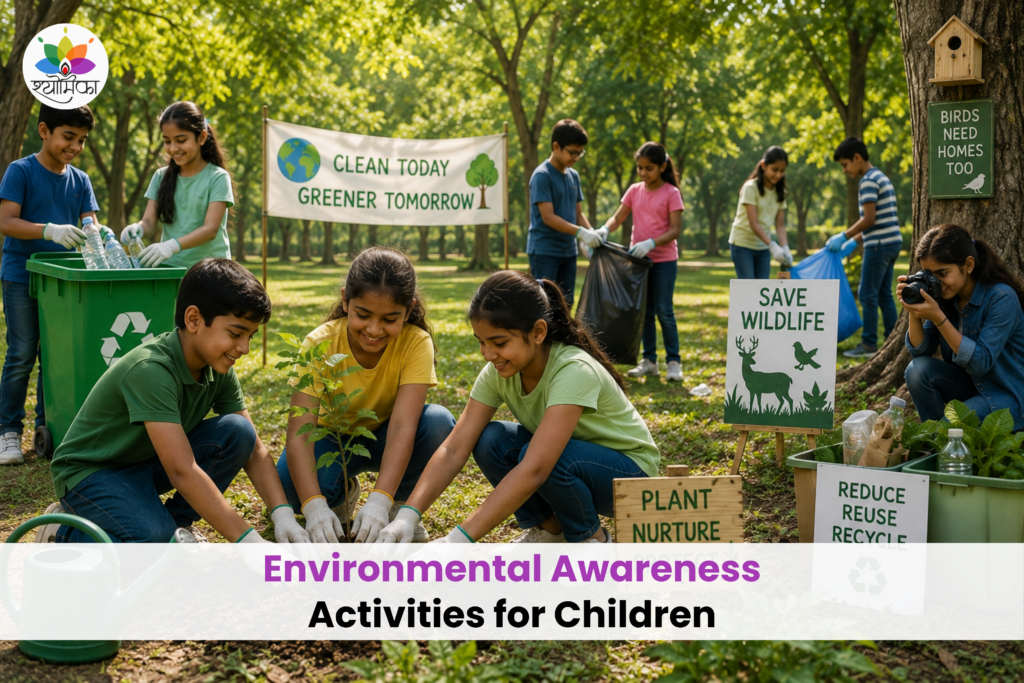
Environmental Awareness Activities for Children
Fun Community-Based Activities
Participating in environmental awareness activities for children encourages teamwork while reinforcing environmental values.
Examples include:
- Tree plantation drives
- Park clean-up campaigns
- Wildlife awareness events
- Nature photography competitions
- Recycling workshops
- School eco-clubs
Community participation also teaches children that environmental protection is a shared responsibility.
Celebrate Environmental Days Together
International environmental events provide valuable opportunities for learning.
Families and schools can celebrate:
- World Environment Day
- Earth Day
- World Wildlife Day
- International Day of Forests
- Water Conservation Day
Organizations like Shyomika Foundation actively promote environmental awareness by encouraging communities to participate in educational initiatives that inspire children to become future guardians of nature.
How to Raise Environmentally Responsible Children
Build Sustainable Habits at Home
Parents often ask how to raise eco-conscious children in a world of distractions and technology. The answer is not perfection but consistency. Children learn values that last a lifetime by observing what happens each day in their own homes and by taking part in simple, real activities.
Some practical habits include:
- Encourage children to switch off lights and fans when not in use.
- Teach them to separate recyclable and non-recyclable waste.
- Carry reusable water bottles and shopping bags.
- Reduce the use of single-use plastics.
- Plant and care for trees or home gardens.
- Appreciate wildlife without disturbing natural habitats.
These small habits teach responsibility while helping children understand how individual actions can positively impact the environment.
Celebrate Progress Instead of Perfection
Environmental responsibility develops gradually.
Parents should encourage curiosity, reinforce positive behaviours and let children learn through practice, rather than waiting for perfect habits to appear right away.
Small wins such as nurturing a plant, minimising waste, or participating in a clean-up drive can motivate children to keep making environment-friendly choices.
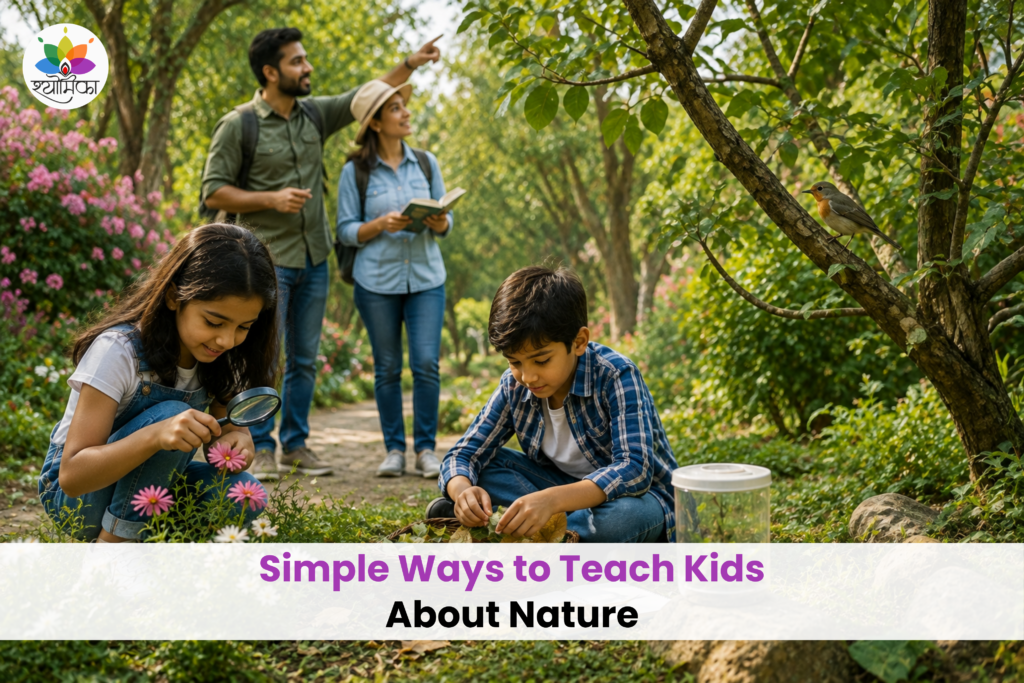
Simple Ways to Teach Kids About Nature
Learning Through Everyday Adventures
Many families search for simple ways to teach kids about nature without requiring expensive trips or specialized equipment.
Meaningful experiences can include:
- Visiting botanical gardens
- Watching birds in local parks
- Identifying trees during walks
- Collecting fallen leaves for art projects
- Exploring seasonal flowers
- Observing insects respectfully
These activities encourage curiosity while helping children appreciate biodiversity in their own communities.
Encourage Questions and Exploration
Children naturally ask questions about the world around them.
Parents and educators can encourage learning by discussing topics such as:
- Why trees are important
- How rain supports plant growth
- Why pollinators matter
- How recycling protects natural resources
Open conversations strengthen environmental understanding while building critical thinking skills.
Why Shyomika Foundation Promotes Environmental Education
Inspiring the Next Generation of Environmental Leaders
At Shyomika Foundation, we believe that lasting environmental change begins with education. When children understand the importance of protecting forests, conserving water, reducing waste and respecting biodiversity, they are more likely to become responsible citizens who contribute positively to society.
Our environmental initiatives encourage:
- Community awareness
- Tree plantation campaigns
- Nature-based learning
- Sustainable living practices
- Youth participation in conservation efforts
Through educational programs and community engagement, the foundation strives to create a future where environmental responsibility becomes a shared value.
Creating a Greener Tomorrow Together
Every child who develops a connection with nature becomes a potential ambassador for environmental conservation.
By working with families, schools, volunteers, and local communities, Shyomika Foundation continues to promote awareness, inspire action and encourage sustainable lifestyles that benefit both people and the planet.
Frequently Asked Questions (FAQs)
Q: 1. Why is it important to teach children about nature?
Learning about nature helps children develop respect for the environment, understand biodiversity, improve emotional well-being, and build lifelong habits that support conservation.
Q: 2. What are the benefits of spending time outdoors?
Outdoor experiences encourage physical activity, creativity, curiosity, problem-solving, emotional resilience, and appreciation for the natural world.
Q: 3. How can parents encourage environmentally friendly habits?
Parents can lead by example through recycling, reducing waste, conserving water, planting trees, using reusable products, and involving children in sustainable household activities.
Q: 4. What age should children begin learning about the environment?
Environmental education can begin during early childhood using simple activities such as gardening, nature walks, storytelling, and observing plants and animals.
Q: 5. Can schools help children become environmentally responsible?
Yes. Schools play an important role by integrating environmental education into classroom learning, organizing outdoor activities, and encouraging participation in sustainability projects.
Q: 6. How do organizations like Shyomika Foundation contribute to environmental awareness?
Organizations promote conservation through educational campaigns, tree plantation initiatives, community programs, environmental workshops and awareness activities that inspire children and families to protect nature.
Conclusion
Teaching kids to love nature is one of the best investments that parents, educators, and communities can make for the future. Kids who play outside, explore forests and parks, and take care of plants learn to value natural resources and develop habits that are healthy for their own development and for the environment.
Simple everyday experiences—such as gardening, nature walks, recycling, and observing wildlife—can inspire curiosity, compassion, and responsibility. Over time, these small lessons help children grow into adults who value sustainability, respect biodiversity and make environmentally conscious decisions.
At Shyomika Foundation, we believe that environmental education is a powerful tool for creating lasting change. By encouraging families and communities to nurture children’s connection with nature, we can collectively build a greener, healthier, and more sustainable future for generations to come.
Every tree planted, every outdoor adventure and every conversation about protecting the planet helps shape a child who understands that caring for nature is not just an option—it is a shared responsibility.
