
Across many hill regions, a quiet but deeply impactful shift is taking place. Villages that once thrived with active communities are slowly losing their younger populations. Homes remain locked for most of the year, schools see declining enrollment and agricultural fields are left unattended. This ongoing pattern of migration from the hills is not rooted in a lack of belonging, but in the growing gap between aspirations and opportunities.
For young people, staying in hill areas often means limited access to education, employment, healthcare and long-term economic security. As cities promise better prospects, migration becomes less of a choice and more of a necessity. Understanding why this movement is happening—and what can realistically reverse it—is essential for the future of hill communities.
Understanding Migration from the Hills in Today’s Context
Migration patterns are shaped by multiple social and economic forces.
Migration from the Hills as a Survival Decision
For many families, migration from the hills represents a strategy to ensure stability. Rising costs of living, unpredictable agricultural income and shrinking local markets push households to seek alternatives elsewhere. Young people often migrate first, sending remittances back home to support their families.
This gradual movement reshapes entire communities over time.
Youth Migration from the Hill Areas and Changing Aspirations
Young people view opportunity differently than previous generations.
Why Youth Migration from the Hill Areas Is Increasing
Youth migration from hill areas is closely linked to education and exposure. Access to higher education often requires leaving home and once young people experience urban systems, returning becomes difficult due to limited local opportunities. Career growth, financial independence and social mobility are powerful motivators.
This generational shift reflects changing expectations rather than rejection of rural life.
Rural to Urban Migration and the Pull of Cities
Urban centers act as magnets for opportunity.
Migration from the Hills to Urban Economies
Rural to urban migration accelerates when cities offer employment diversity, healthcare access and infrastructure that hill regions struggle to provide. Even informal urban employment may appear more reliable than seasonal rural work.
As urban economies expand, the imbalance between rural and urban development becomes more pronounced.
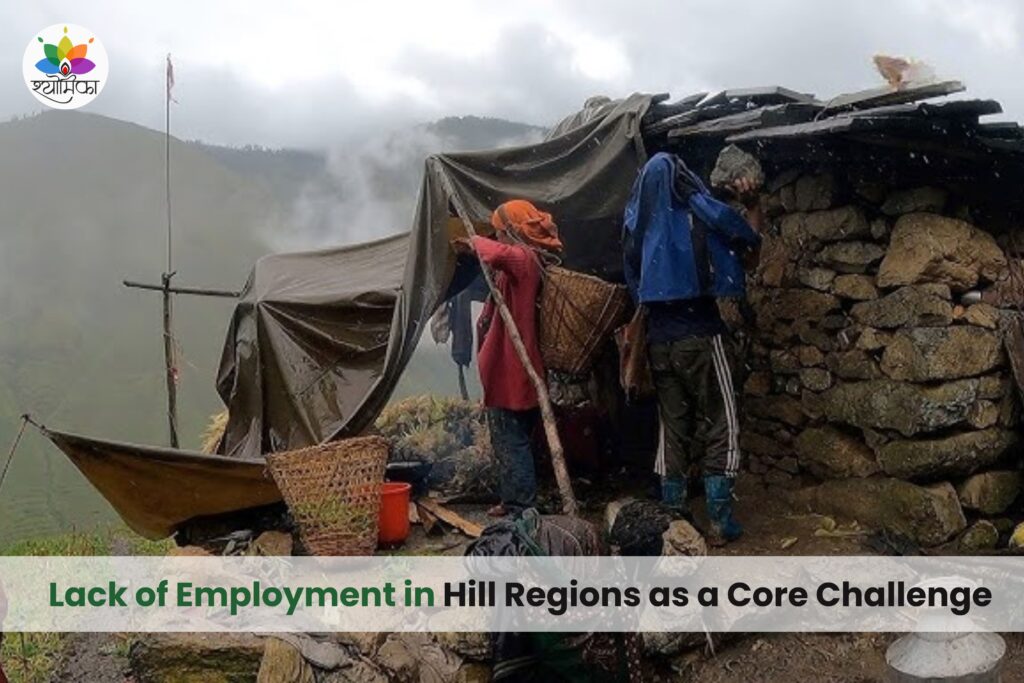
Lack of Employment in Hill Regions as a Core Challenge
Economic limitations are central to migration decisions.
How Lack of Employment in Hill Regions Drives Migration
The lack of employment in hill regions leaves educated youth with few choices. Agriculture alone cannot absorb the growing workforce and non-farm jobs remain scarce. Small-scale enterprises often lack financial support and market access.
Without diversified livelihoods, remaining in hill areas becomes economically unsustainable.
Social Impact of Migration from the Hills on Communities
Migration affects more than just individuals.
Communities Transformed by Out-Migration
As working-age populations decline, villages face labor shortages, aging demographics and weakened social networks. Cultural practices fade and community leadership gaps emerge. The absence of youth affects innovation, resilience and long-term development.
Social cohesion weakens as families become geographically divided.
Gender Dimensions of Migration from the Hills
Migration reshapes household dynamics.
Changing Roles Within Hill Communities
Male migration often leaves women managing households, agriculture and caregiving responsibilities. While this can increase agency, it also adds significant physical and emotional burden. At the same time, more young women are migrating independently for education and work, altering traditional gender roles.
Any long-term solution must account for these gender-specific realities.
Environmental Stress and Migration from the Hills
Nature increasingly influences livelihood security.
Climate Pressure and Rural Vulnerability
Erratic rainfall, soil degradation and declining agricultural yields increase uncertainty. Environmental stress compounds economic hardship, pushing families toward migration as a coping mechanism. When natural resources can no longer sustain livelihoods, mobility becomes unavoidable.
Environmental resilience is therefore directly linked to migration trends.
Reversing Migration from the Hills Through Local Opportunity
Reversal requires systemic change, not restriction.
Reversing Migration from the Hills by Creating Viable Futures
Reversing migration from hills depends on making local life economically and socially viable. This includes investing in education, healthcare, infrastructure and local enterprises. When people see a future at home, staying becomes a choice rather than a compromise.
Return migration becomes possible when dignity and stability are restored.
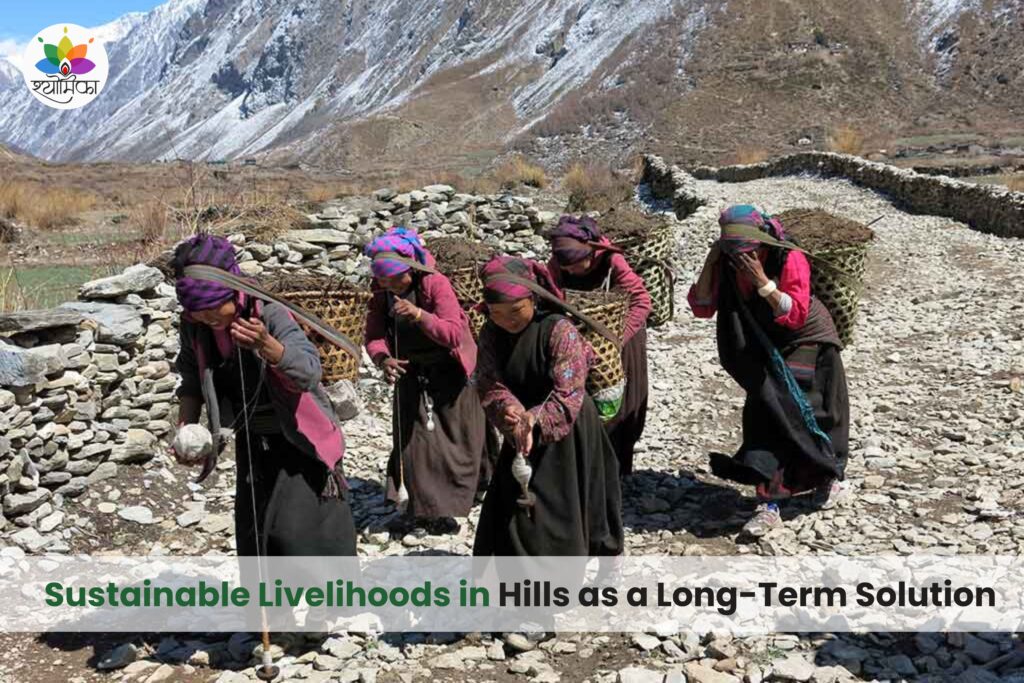
Sustainable Livelihoods in Hills as a Long-Term Solution
Economic sustainability anchors communities.
Building Sustainable Livelihoods in Hills
Developing sustainable livelihoods in hills means aligning income generation with local resources. Agriculture value chains, eco-tourism, forest-based enterprises, handicrafts and digital work opportunities can create diverse employment pathways.
Skill development tailored to regional strengths strengthens local economies without environmental degradation.
Community Based Development and Local Ownership
Communities thrive when they lead.
Community Based Development as a Foundation
Community based development empowers residents to identify priorities, manage resources and drive solutions. Local institutions, cooperatives and self-help groups strengthen social capital and economic resilience.
When communities own development processes, outcomes are more inclusive and sustainable.
Policy and Institutional Role in Addressing Migration
Local efforts need systemic support.
Bridging the Development Gap
Policies must prioritize region-specific planning for hill areas, including digital connectivity, decentralized governance and entrepreneurship incentives. Without institutional backing, grassroots initiatives struggle to scale.
Balanced development requires coordination between communities and policymakers.
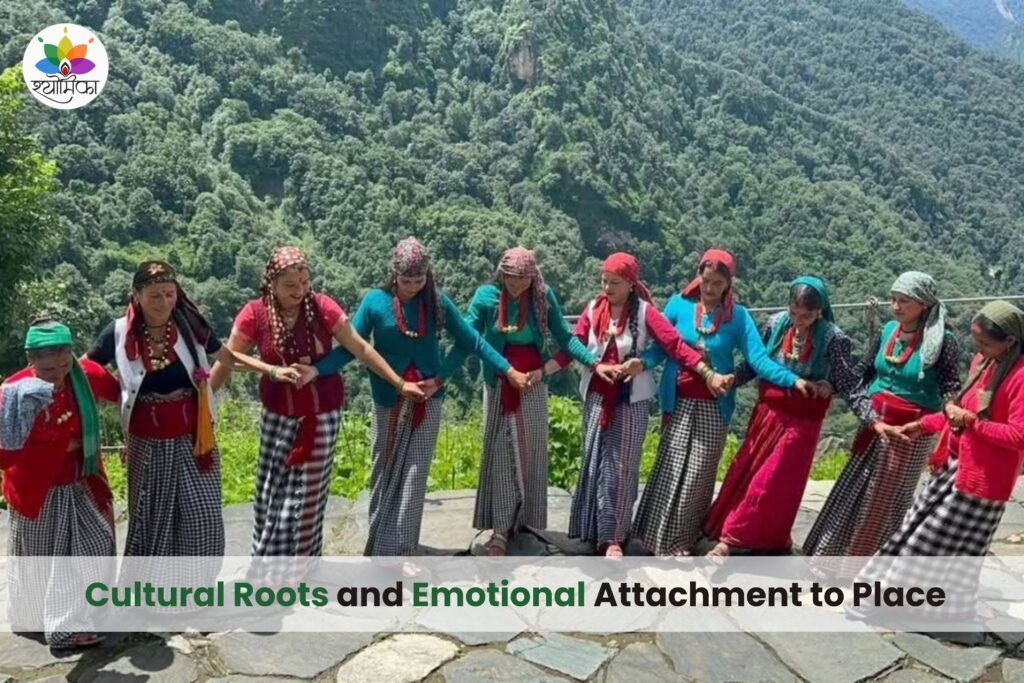
Cultural Roots and Emotional Attachment to Place
Migration is not only economic.
Preserving Identity While Creating Opportunity
Strong cultural ties often pull people back home—if basic needs are met. Preserving traditions, language and community rituals strengthens emotional bonds to place. Cultural pride complements economic opportunity in encouraging youth retention and return.
Development that respects identity builds long-term resilience.
Role of Organizations in Addressing Migration from the Hills
Grassroots action matters.
Supporting Community-Centered Change
Organizations like Shyomika Foundation work to strengthen local capacities through education, livelihood development and social initiatives. By addressing root causes rather than symptoms, such efforts contribute meaningfully to long-term solutions.
Community-driven approaches ensure development remains grounded in lived realities.
Migration from the Hills: Choice Versus Compulsion
Mobility itself is not the problem.
Ensuring Migration Remains Optional
Migration can bring skills, exposure and remittances that benefit communities. The challenge arises when migration is driven by lack of options. Sustainable development aims to ensure people can move by choice—and also choose to stay.
Balance, not restriction, should guide policy and practice.
Frequently Asked Questions (FAQs)
Q1: What is migration from the hills?
It refers to people, especially youth, leaving hill regions for urban or plain areas seeking better opportunities.
Q2: Why is youth migration from hill areas increasing?
Limited jobs, education access, healthcare and income stability are major reasons.
Q3: Is rural to urban migration always harmful?
Not always, but large-scale out-migration weakens local economies and social structures.
Q4: How can reversing migration from hills be achieved?
By creating sustainable livelihoods, improving services and supporting community-led development.
Q5: What role does community based development play?
It empowers local people to shape solutions, ensuring long-term resilience.
Q6: Can migrants return to hill regions?
Yes, if opportunities, dignity and quality of life improve locally.
Conclusion
The issue of migration from the hills reflects deeper inequalities in access, opportunity and development. Young people leave not because they want to abandon their homes, but because their aspirations cannot be fulfilled locally. Addressing this challenge requires empathy, long-term planning and investment in people rather than short-term fixes.
By strengthening local economies, supporting sustainable livelihoods and empowering communities through participatory development, it is possible to build futures where staying is a viable and fulfilling choice. With collective effort from communities, institutions and organizations like Shyomika Foundation, hill regions can move toward resilience—where migration becomes a matter of choice, not necessity.
